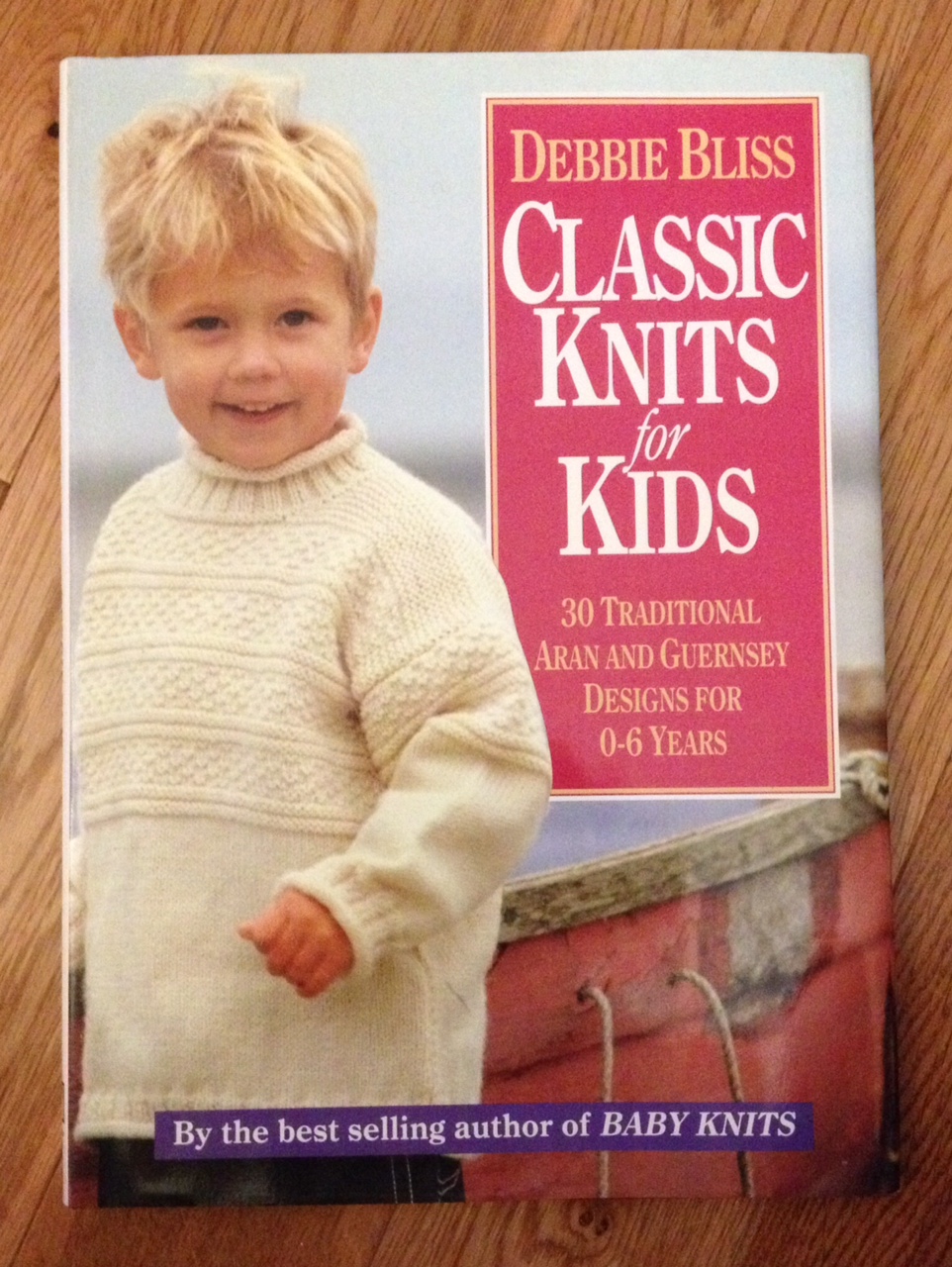
Debbie Bliss Classic Knits for Kids

Classic__Kids_Knits

In keeping with my “baby/kid” book quest, I took a gander at Debbie Bliss Classic Knits for Kids with 30 Traditional Aran and Guernsey Designs for 0-6 year olds.

It was published in 1994 so some of the sweaters are a bit on the oversized look. However, I do know that Debbie does love to style and show baby/kids sweaters that have a loose and oversized look. She’s known for creating the kind of sweater that is perfect for growing into and will last for several years.

This is definitely a thumbs up book. I will say that when I looked it up on Amazon, new copies go for over $30 so I can’t be alone.

What did I love about the book: the photos are so sweet and the whole book has lovely styling. I love the fact that all the sweaters are one color with tons of texture in knit and purl stitches and interesting cabling.

What did I not like: I would have preferred to have separate stitch patterns or charts rather than row after row of patterning. When this book was publishing the default wasn’t charts for stitch patterning so that’s a minor complaint. The language is a bit “English” style rather than “American” which could be a bit off-putting to some.

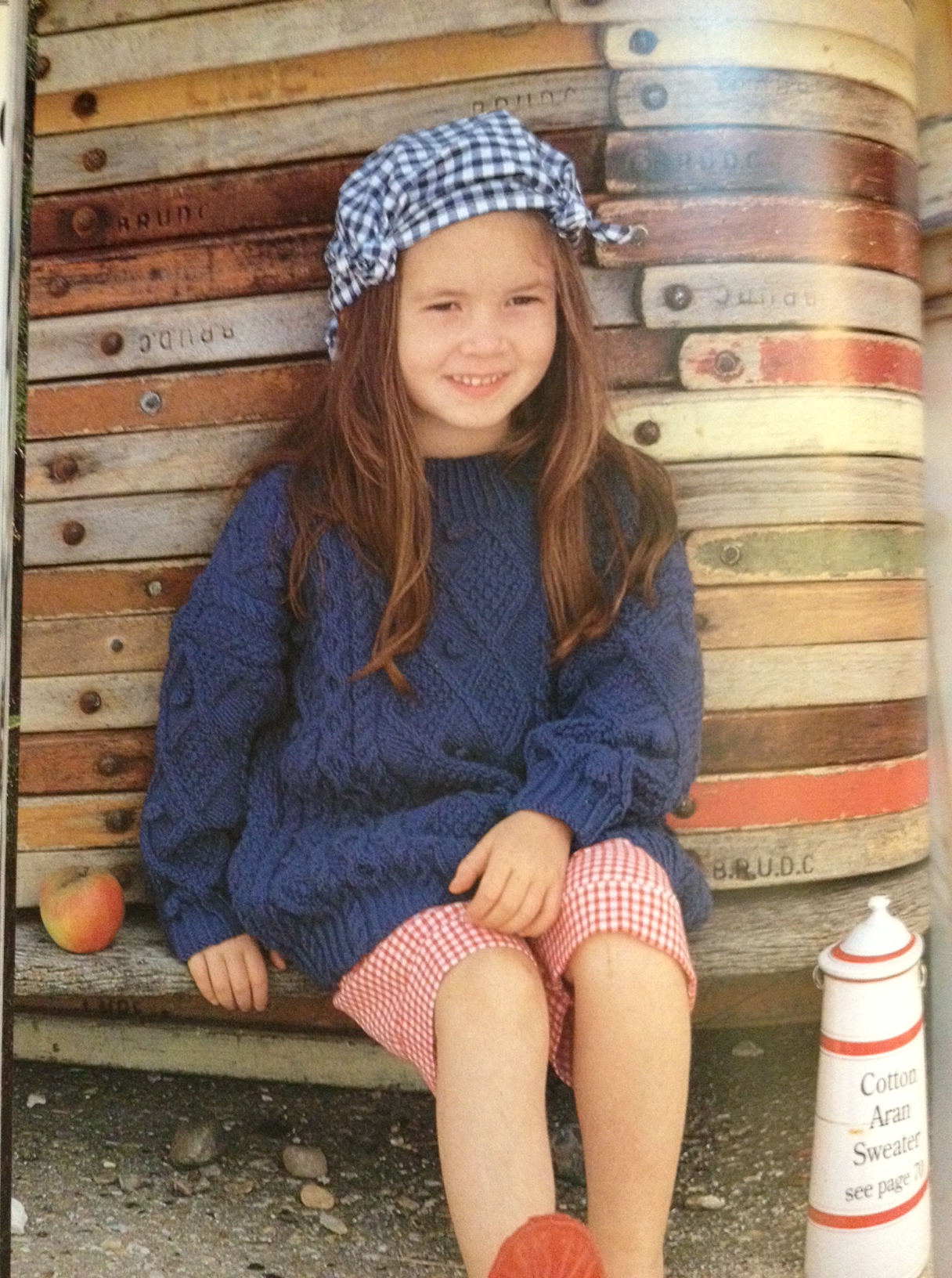
My favorite sweater (especially after my Aran journey) is called Cotton Aran Sweater:
denim_aran

A few others I like –

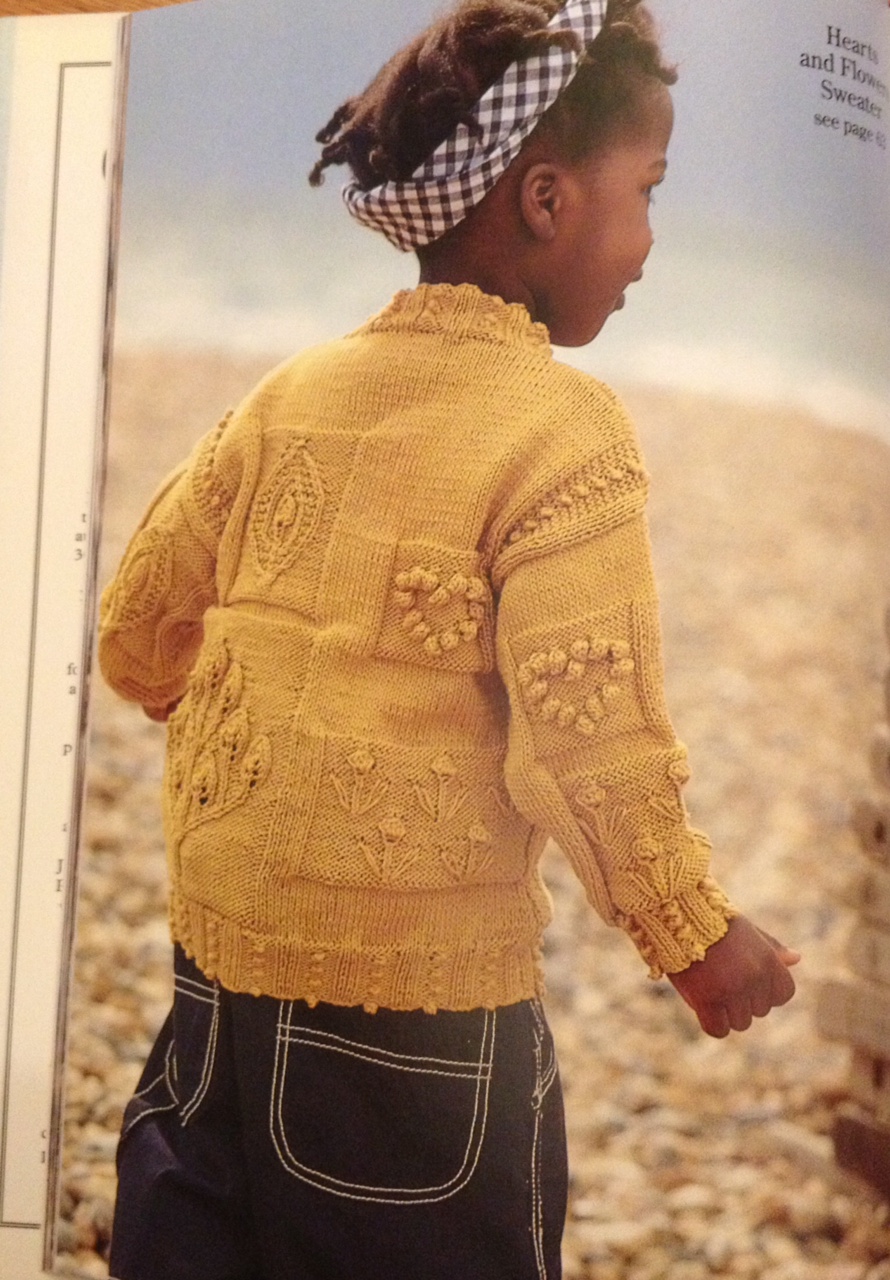
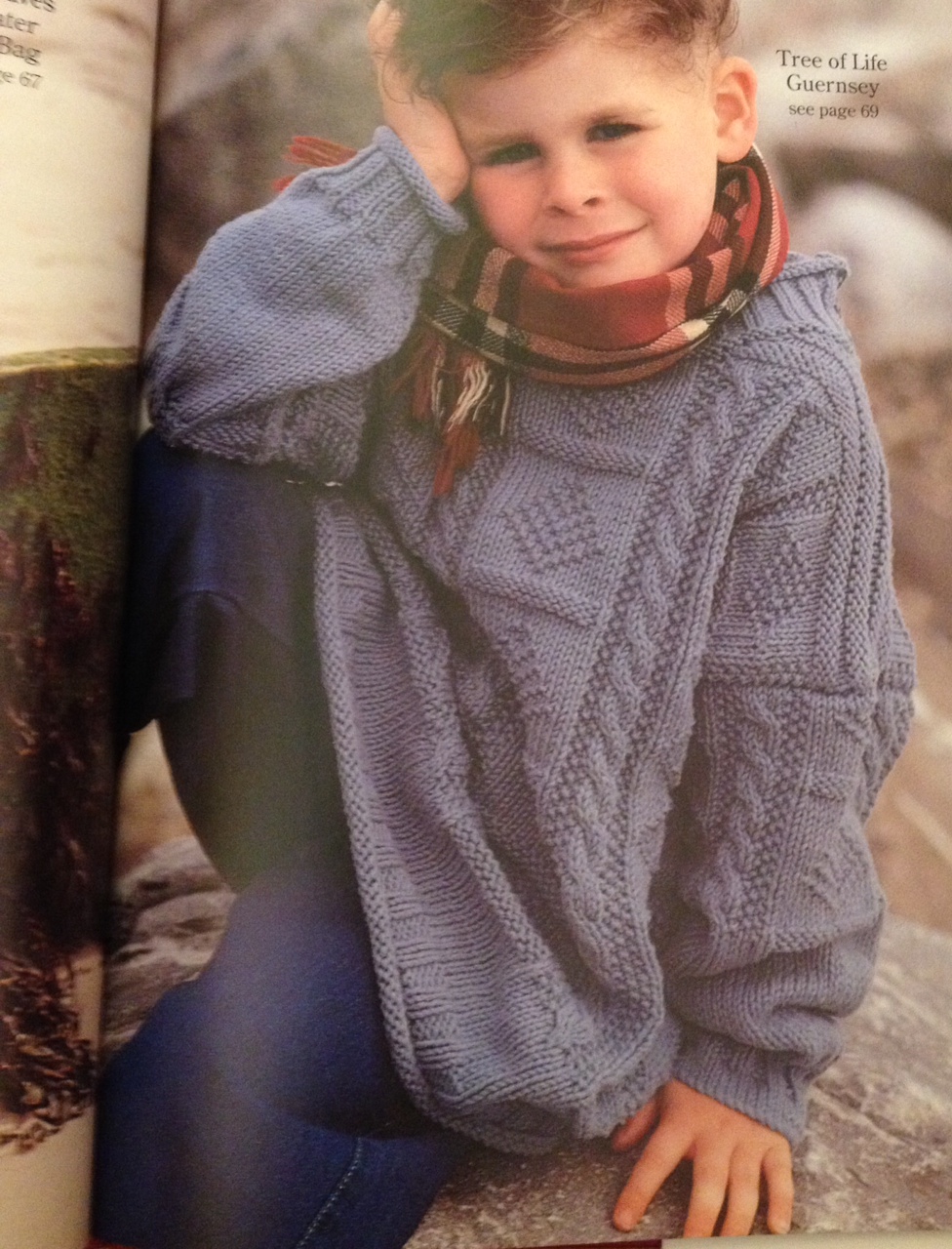
yellow_sweater  gernesey

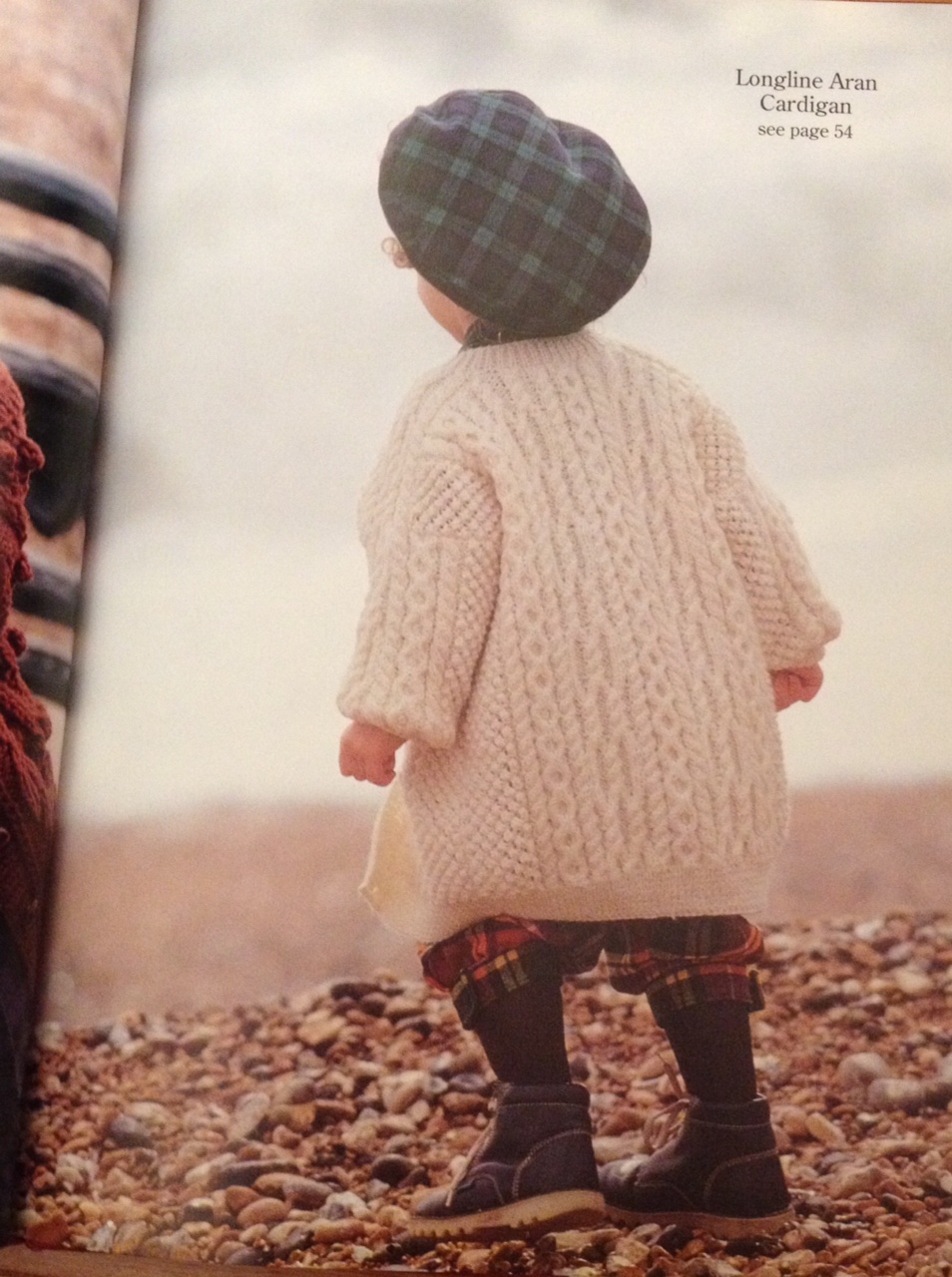
Baby_Arans

http://www.amazon.com/Classic-Knits-Kids-Traditional-Guernsey/dp/1570760268/ref=sr_1_1?ie=UTF8&qid=1402606597&sr=8-1&keywords=Debbie+Bliss+Classic+Knits+for+Kids

Vogue Knitting Baby Blankets

Baby_Blankets

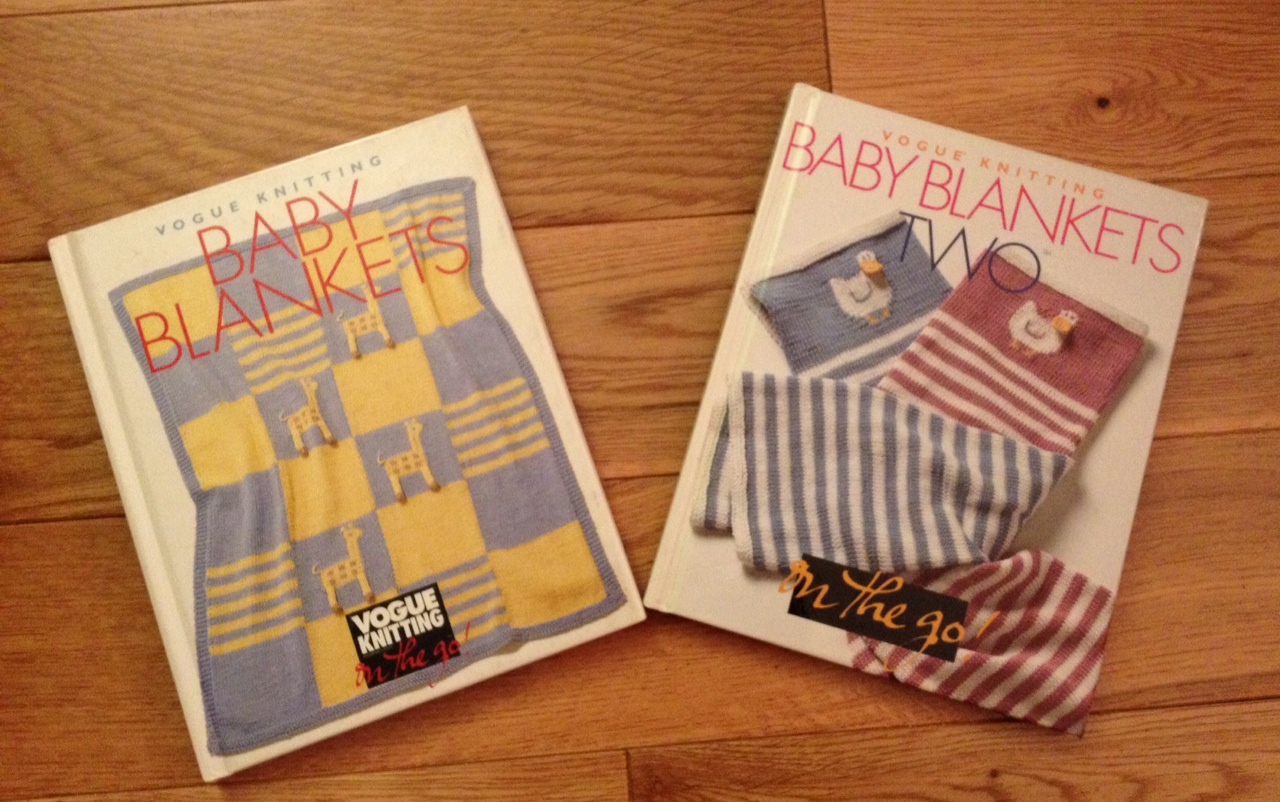
Two little books surfaced today. They don’t have tons of fluffy text, they simply have knitted patterns for baby blankets. I was really ready to move these to the “out-the-door” with other thumbs down books. Sadly I did find a few patterns that made me change my mind.

Here are a few stats on the books. The first Baby Blankets was published (Sixth & Spring) in 2000 as part of the On the Go series. The second, Baby Blankets Two (2004). Both have several pages of Basics which would be helpful to those without too much experience. Both have 24 patterns – kind of amazing in such little books. The photograph is good with simple still life views – not a baby in sight.

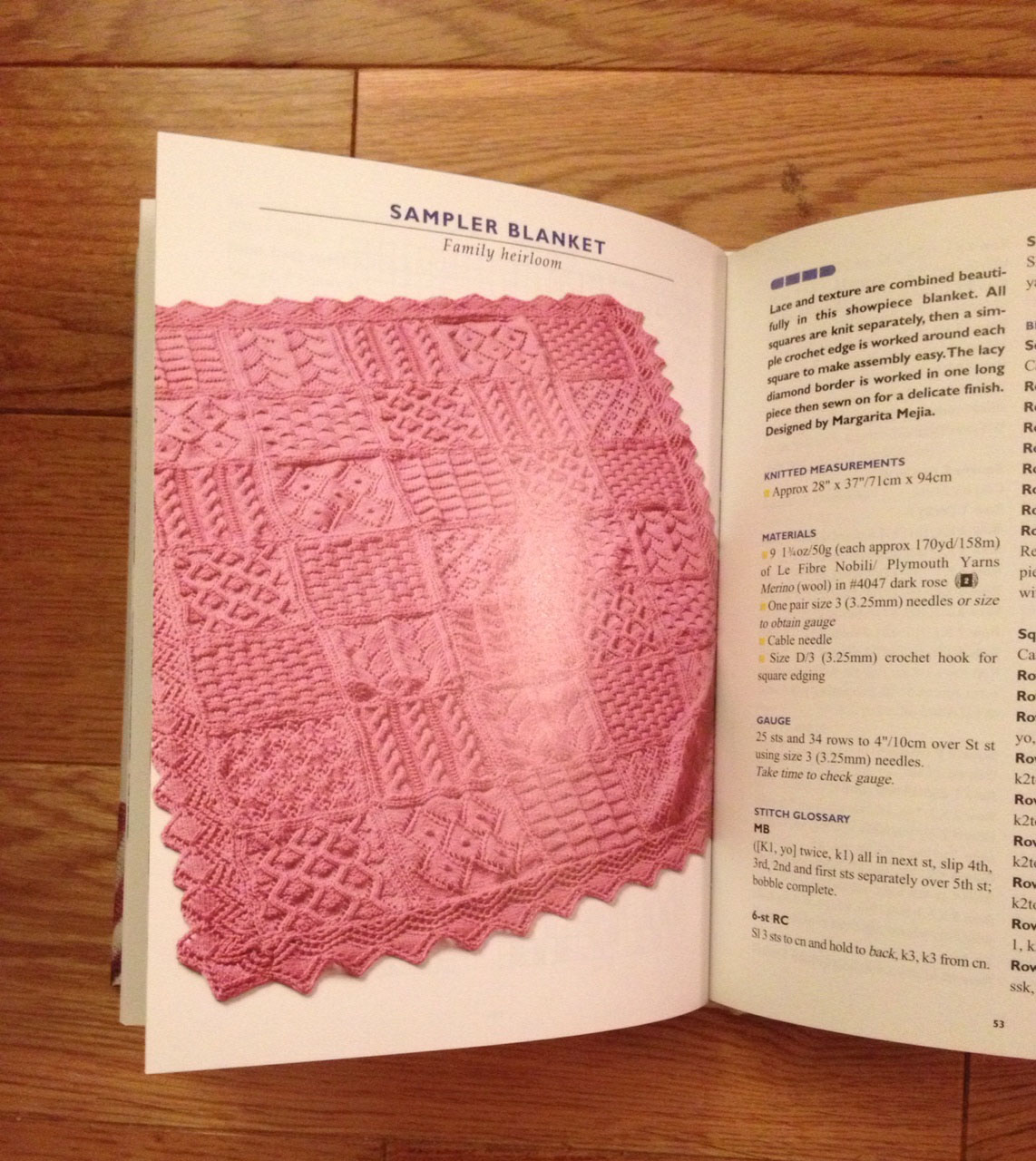
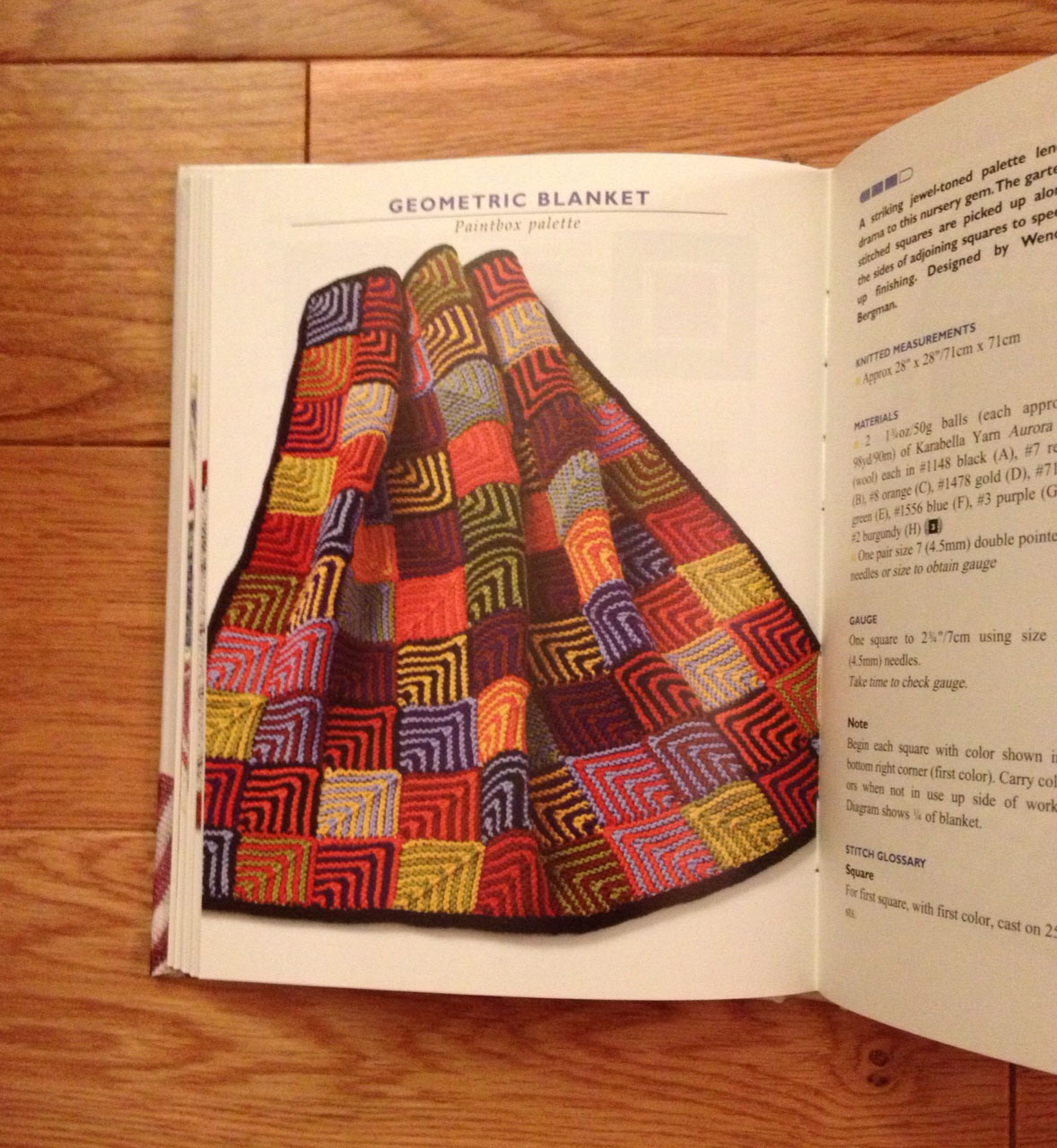
Here are a few of the ones that made me reconsider dumping these two. Sadly they aren’t the best photos. You can see that I’m in love with sampler styles and counterpane pieces. I also do love miters although, I’m not nuts of the colors used for the one shown.

baby_blanket2   baby_blanket3

  baby_blanket1

Here are links to the books on Amazon. While not available as new, can still be purchased.

http://www.amazon.com/Vogue-Knitting-Go-Baby-Blankets/dp/1573890197/ref=sr_1_1?s=books&ie=UTF8&qid=1402351165&sr=1-1&keywords=vogue+knitting+baby+blankets

http://www.amazon.com/Vogue-Knitting-Go-Baby-Blankets/dp/1931543437/ref=pd_sim_b_2?ie=UTF8&refRID=082BC1BVN8R8YXZNKP12

Baby Books Week

Image

Notice I said Baby Books Week. This means more than one book this week. After getting bogged down with the last book, I’m determined to get a few more books under my belt.

I’m starting with two that are in the thumbs down category.

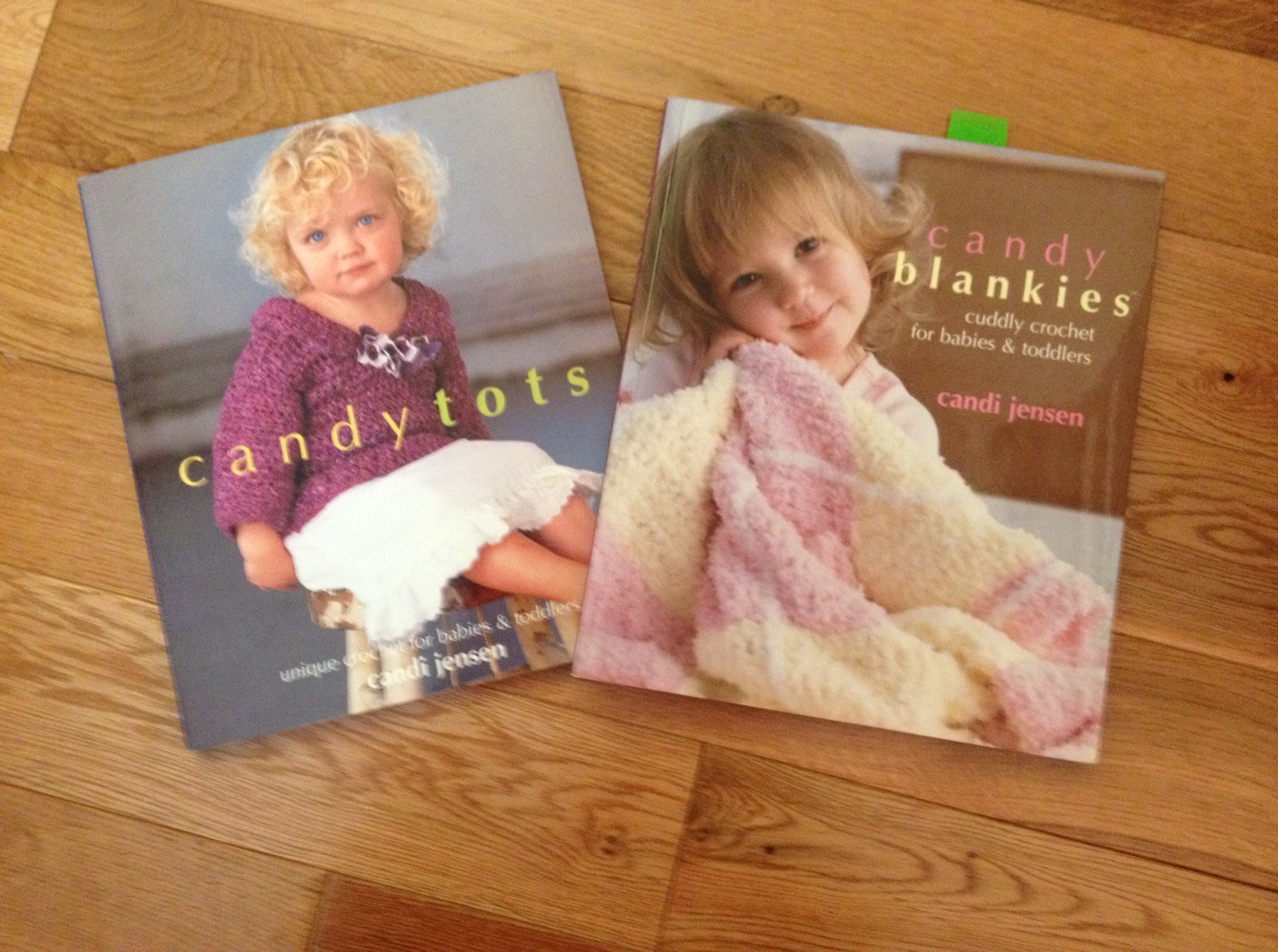
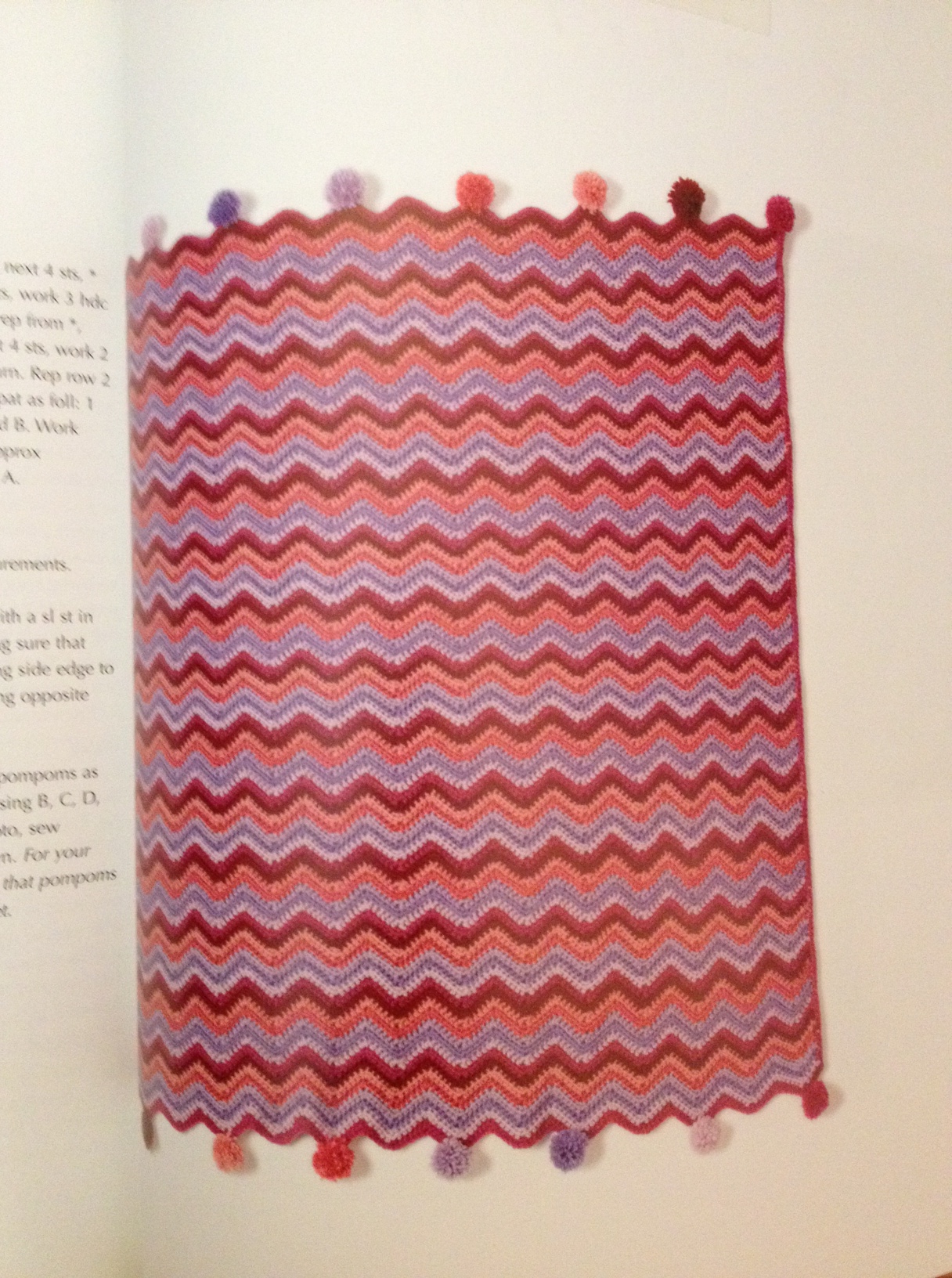
Candy Blankies and Candy Tots – both by Candi Jensen both crochet baby/toddler books. They are both nicely photographed and have contemporary layouts and styling. The problem is that there is only one pattern in both books that I might make. I’m going to make a copy of that pattern and move these books off my shelf.

Baby Ripple I’m saving –

baby_ripple


I have more baby pattern books that I’ll discuss later this week. Can’t you just see the smile on my face!

Aran Sweaters and the big finish!

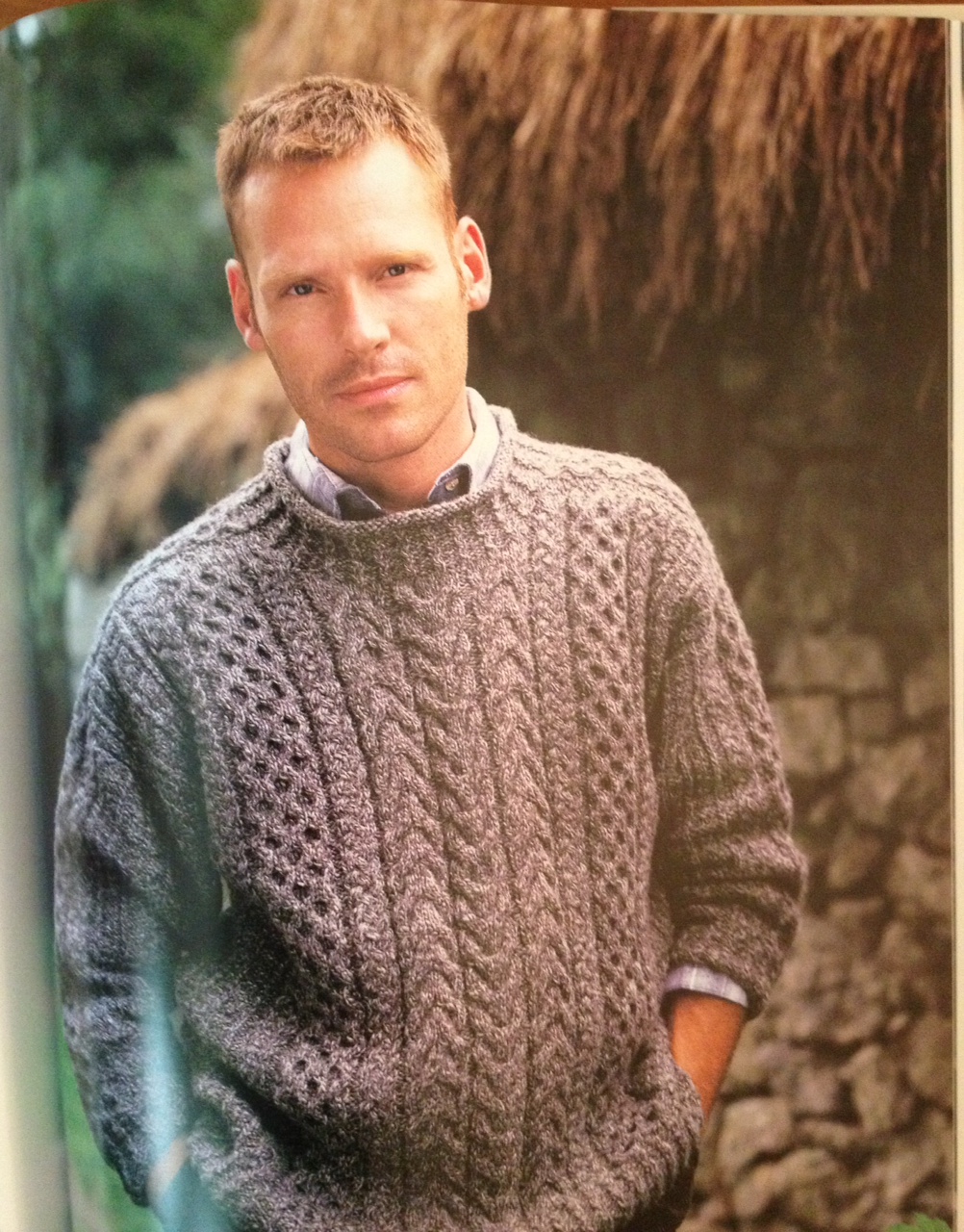
Man_AranAranKnitting

Today I went through the original Aran Knitting (hardcover, 1997) and the new and expanded edition Aran Knitting (trade soft cover, 2010). Most of the original sweaters were included in “new and expanded”. Some were recolored and rephotographed.  I really didn’t feel that the difference was really great in the update. I loved the red-haired model from the original book rather than the brunette used in the revised book, but that doesn’t really matter in terms of the sweaters.

The man’s sweater above is shown on the new book as the cover sweater on a woman. It was the one I’ve chosen to knit, even though I haven’t made much headway on the knitting.

The other sweaters (a few shawls and hats) are mainly classics that perfect for knitters who love cables. I was thinking that the two shawls (a bit heavy for shawl wearing) would be terrific as throws if they were made slightly wider. A few of the sweaters are a bit long with an ’80s vibe. That could be easily changed by a knitter with some skill in adaption.

My review of two sweaters in the expanded issue:

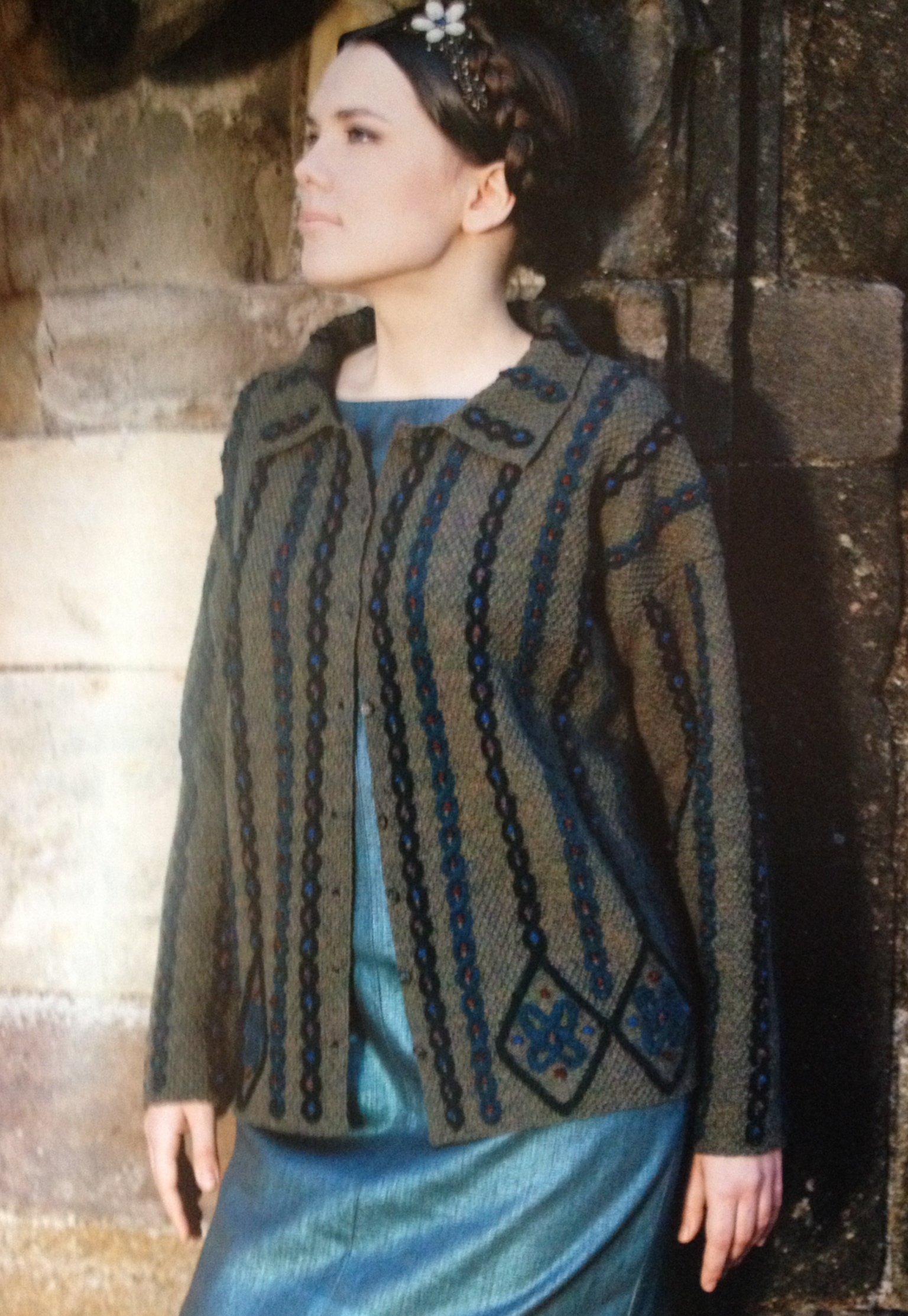
Boudicca’s Braid (Celtic Art based). I really don’t like this one. I would say “hate”, but that’s a pretty strong word. This cardigan doesn’t add much to the book that is until this sweater based on one-color beautiful designs.

Aran_colorwork


Eala Bhan (Alice designed this for herself). This is modern and beautiful. I do love this cardigan. It has very long instructions, but she says it’s not difficult to knit.

Aran_cardie

The final section is based on designing your own Aran sweater. I think it would be best used to help adjust a pattern, but for someone who wants to create a unique sweater. There is two pages that discuss blocking, seaming, making tassels and fringe and the care of wool garments. There is also “a word from your sponsor” with info on buying Alice Starmore Yarns. I do think this is really good for those who want to make the sweaters as they appear in the book.

Alice gives a web site – alicestarmore.com – which didn’t seem to go anywhere when I clicked on textiles. I also looked at virtualyarns.com where yarn, books and patterns by Alice can be obtained. This site seems good and up-to-date.

I give this book a thumbs up.

Worth keeping and having in my library. At this point I might keep both copies as I like the man’s version in the early book and the woman’s in the later version. One day I might have to choose and give up one or the other…..

Aran Cable Stitches

Aran_Cables

This book is going very slowly, but this week I feel like I made headway. I got through the text heavy  speculations on when Aran Knitting actually started. In the end in the final speculation Alice believes that the reality is that the first ’40s and ’50s – much later than anyone else dared to say. By the time I got through it, I’m not sure that I really care anymore. Aran Knitting is still interesting to many knitters – especially those who buy this book!

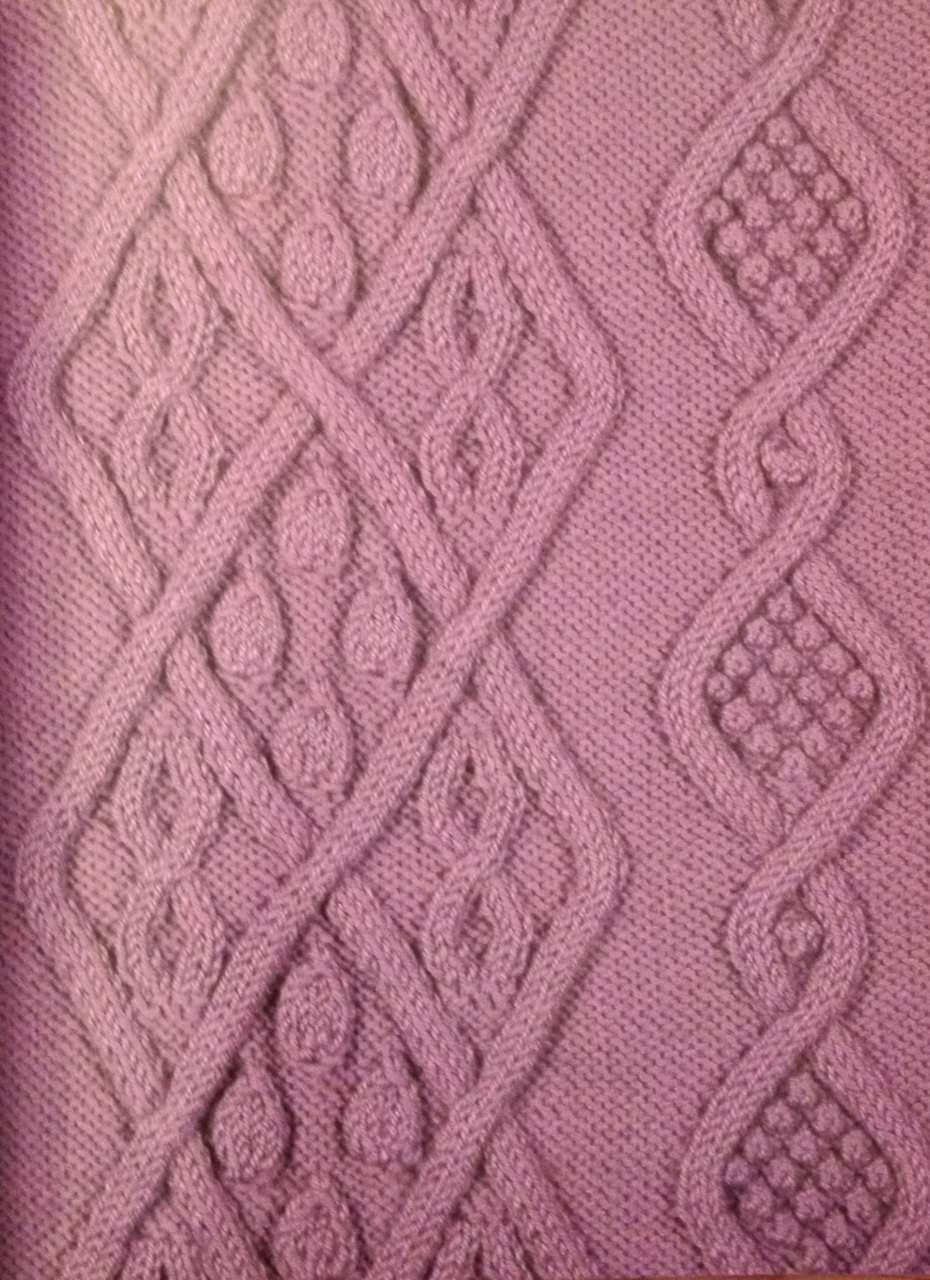
So from there I went on to Aran Patterns – Yeah! All the stitch pattern photos were knit in Alice Starmore Bainin (an Aran weight wool). It’s actually a really good yarn for the stitch pattern which appear crisp and stand out well from the reverse stockinette background. The light plum color photographed very well. Actually better than off-white and definitely better than a dark shade.

This is a meaty section – from page 52 through page 99. A great reference library for cable lovers.

I thought I knew lots about cables, but I did learn more than I thought I would from the book. For me, this is the most important factor in my own personal “keep or lose” in book reviews.

First, There is a good chart key, although the actual symbols are not ones that I see generally used in US publications. I give Alice good marks on including excellent illustrations/drawings of how to create various cables beginning with the simplest cable crossings.

Alice covers many cable variations from double cables to diamond shapes cable formations filled with bobbles, seed stitch, and twisted stitches. The honeycomb panels – I hate. The plaited cables – I love. The surprise was the openwork patterns.

What did I learn?

1) A problem I’ve often had is to figure out what row to actual make a cross. The drawing of “counting rows between cable crosses” shown from the back of the work makes so much sense. Why didn’t I ever think of that before?

2) A good tip – decrease stitches before binding off so that the bind off does flare out.

No, I’m not quite done with this book. In my next post I’ll talk about the designs shown in the book. I want to look at the original book to see if there are any new ones added. As we say in publishing – tk (to come)!


What is an Aran Sweater?

define_Aran

Great trip to UK. Not so great for my blogging. I feel a bit stuck in the Aran Knitting by Alice Starmore book. I know once I read Alice’s conclusion, she goes into Aran stitch patterns and then into actual sweater designs. The light at the end of the tunnel is coming…

I staggered through Alice’s conclusions on Construction and Style. The circular Scottish and/or British Gansey  was the beginning point for the final very commercial Aran Sweater (knit in flat pieces). Then she went on to how the patterns occurred. I’m not sure I completely understood the whole concept. Some of it came from designing sweaters and patterns that could be easily commercially executed. Some of the patterning came from ideas based on the original Gansey concept.

The best and most concise think I learned was how Alice defined the Aran Sweater.

1) Handknit garment of flat construction (in pieces)

2) Composed of of vertical panels of cabled patterns and texture stitches

3) Each piece of the sweater has a central panel flanked by textured patterns (usually somewhat mirror each other)

4) Made of heavy, undyed cream wool – not always

After that “Ah ha Moment”, I decided to stop for the moment. These pages are really text heavy – in small type I must say. I’m not sure that is a good thing. Not light reading!

The sweater above is a good example of a Classic Aran Sweater.


Alice concludes the mystery of the origins of Aran Sweaters


men_Aran

In my last post, Alice was off to study sweaters in the Dublin National Museum of Ireland.

In my recent reading she dissected 4 garments beginning with an early piece (donated in 1937) from Aran that had the structure of a Scottish Gansey. Her dissection was complex and through. Actually, I was awed by her knowledge of knitting structure.

From the first garment, she concluded that what began as circular knit garments without seams evolved into Aran Sweaters knit in pieces. This seems to have been done to allow a knitter to work with textured patterns without being a mathematical genius needed to work out some of the shaping points in the sweaters.

One remarkable conclusion made by Alice is that Aran women learned Gansey knitting skills from Scottish sources.

Also, Aran sweaters (often called f) were not made as a fisherman’s garment. Will talk more about this in my next post.

I want to talk more about Alice’s conclusions, but I’m off to visit the UK tonight and have a plane to catch! I’ll be silent post-wise for a couple of weeks. Sadly, I’m not visiting Aran, although it is on my bucket list!


Aran Knitting – Take 2!

StEdna_man

OK – I really have been reading the background on Aran Knitting. It’s really hard to put it into words, but here’s what I’ve learned about the history of Aran Knitting.

Aran sweaters were not seen until the last 40’s and 50’s. Many of the myths for this knitting style were generated by Heinz Edgar Kiewe (1906-1986). Kiewe organized production of Aran sweaters based on a photo that was published in a book by Mary Thomas (no relation to me). Many of the sweaters were knit in the Western Isles of Scotland as there were not enough knitters in Ireland. So much for the Irish knit theory!

Alice Starmore believes that before her book called The Celtic Collection (1992), “celtic” cabling had not been seen in knitting.

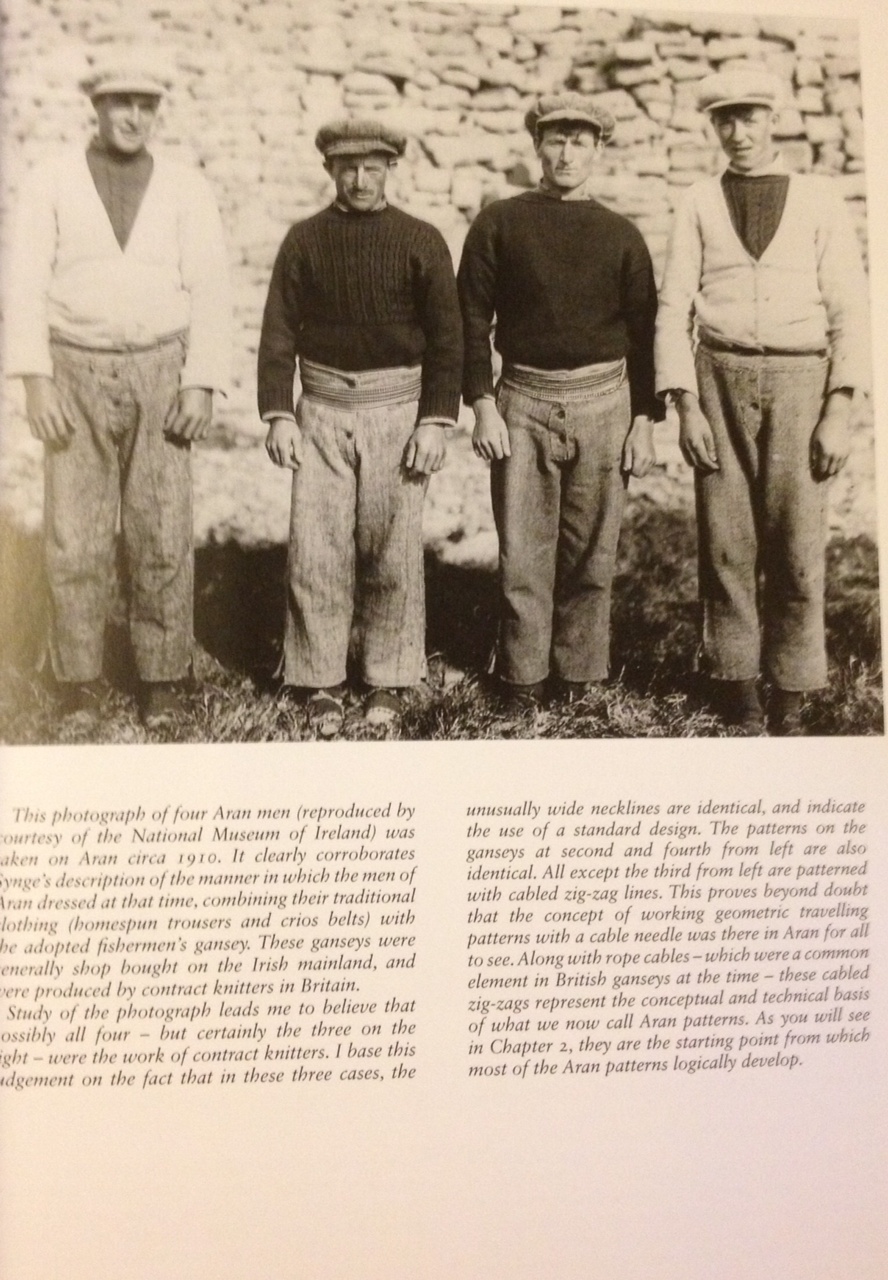
Another myth debunked – Aran Sweaters are not traditional Fisherman’s garments. See my photo of the guys in the last blog post.

Here are a few books who offered history of Aran. These books were almost the only available books in the 80’s and 90’s when I was an editor. We thought of them as historical Bibles:

Patterns for Guernseys, Jerseys & Arans – Gladys Thompson (1955).
Important in development of Aran Knitting. By the way, Aran was not mentioned in the title until 1971 when published by US publisher.

The Complete Book of Traditional Aran Knitting – Shelagh Hollingworth (1982)

Traditional Knitting – Michael Pearson (1984)
Michael (who I met years ago) cast doubt on Kiewe’s theories.

A History of Handknitting – Richard Rutt (1987)
The English Mr. Rutt was also known as the knitting Bishop.
His theory is that the origins of Aran Knitting may have come from the US.

Irish Knitting – Rohanna Darlington (1991)
Rohanna also talks about the US Boston connection by an immigrant woman.

Basically what I could learn is that the fisherman gansey may have been the origin of what we know as the Irish knitting tradition.

In the next chapter, Alice travels to Dublin to the National Museum of Ireland and talks about 3 garments (photographed in the book) and gives her conclusions. That to come!

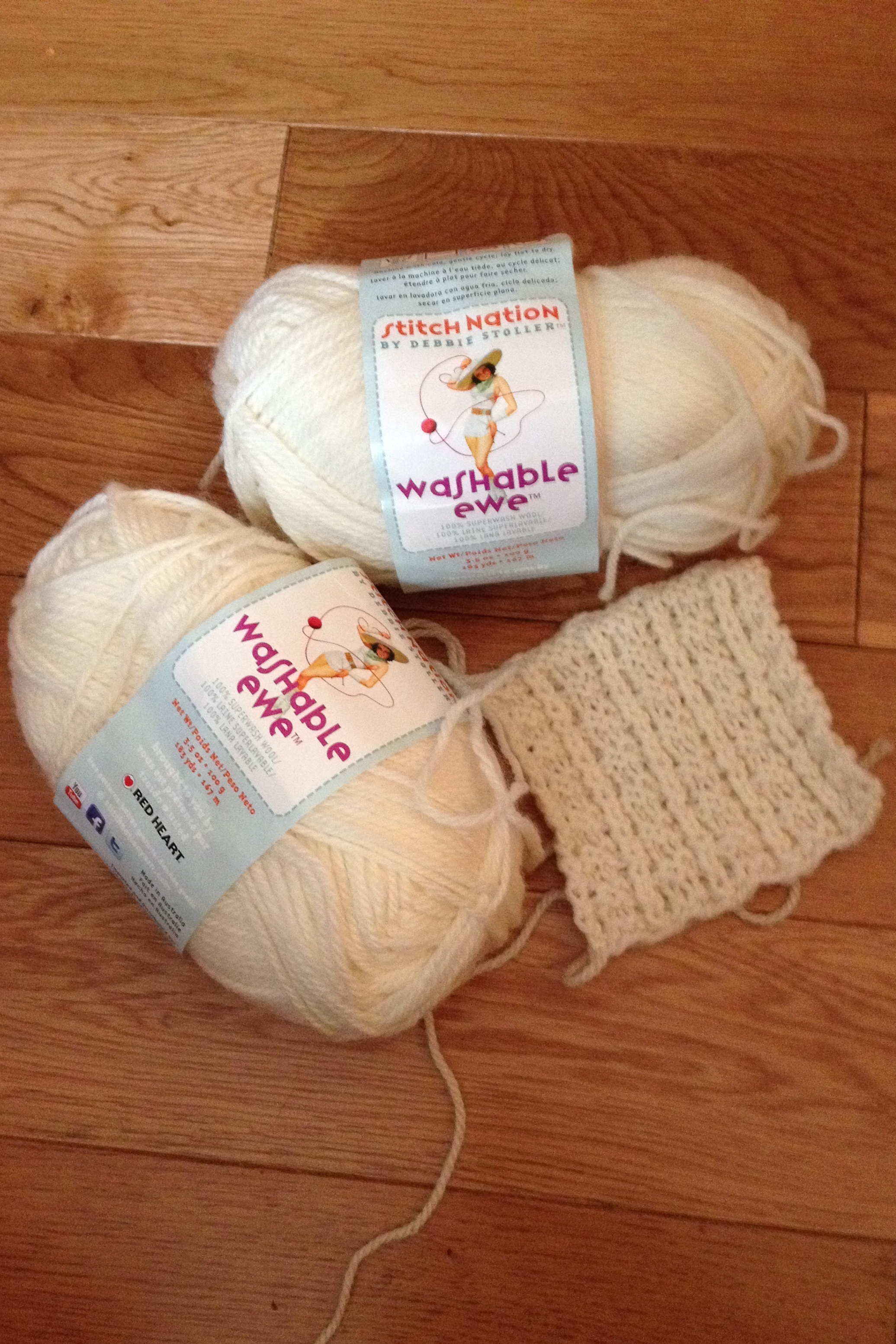
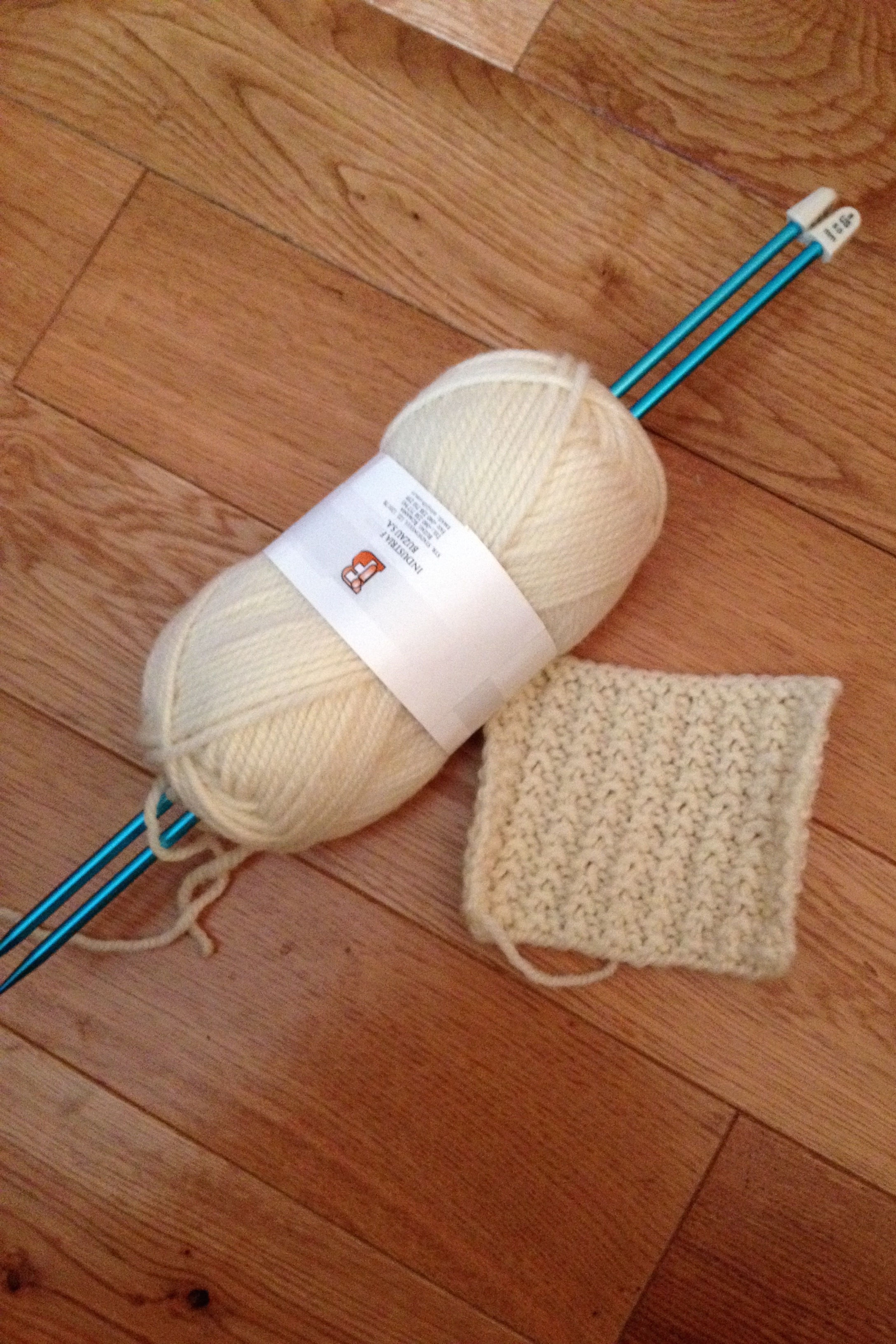
In the meantime, I’ve been swatting. Gauges for the Na Craga (woman) Washable_Ewe

and St Edna (man) sweaters.
StEdna_swatch


A lot of knitting and ambitious projects!

Aran History

men_Aran

I’ve hit a blogging wall. Maybe it was reading about the plight of the Aran people against big landowners that did it. These people did not have an easy life.

Maybe it was reading that what we know about the truly Aran Sweater is really a fantasy that someone dreamed up. There is no long-past historical Aran Sweater? Who knew?

I’m not sure what exactly. I’m trying to slog through the rest of the chapters on the history and the Aran people through the eyes of Alice Starmore.

Notice in this vintage picture of men from the Aran Isles that they are wearing sweaters that really seem more like designs I would call Guernsey Sweaters with cabled rope patterns in the upper front. Maybe they are the precursor to the Aran Sweaters done in natural (off-white) yarns. I’ll give you an update when I get to that far!

Revelations about Alice Starmore’s Aran Knitting Book


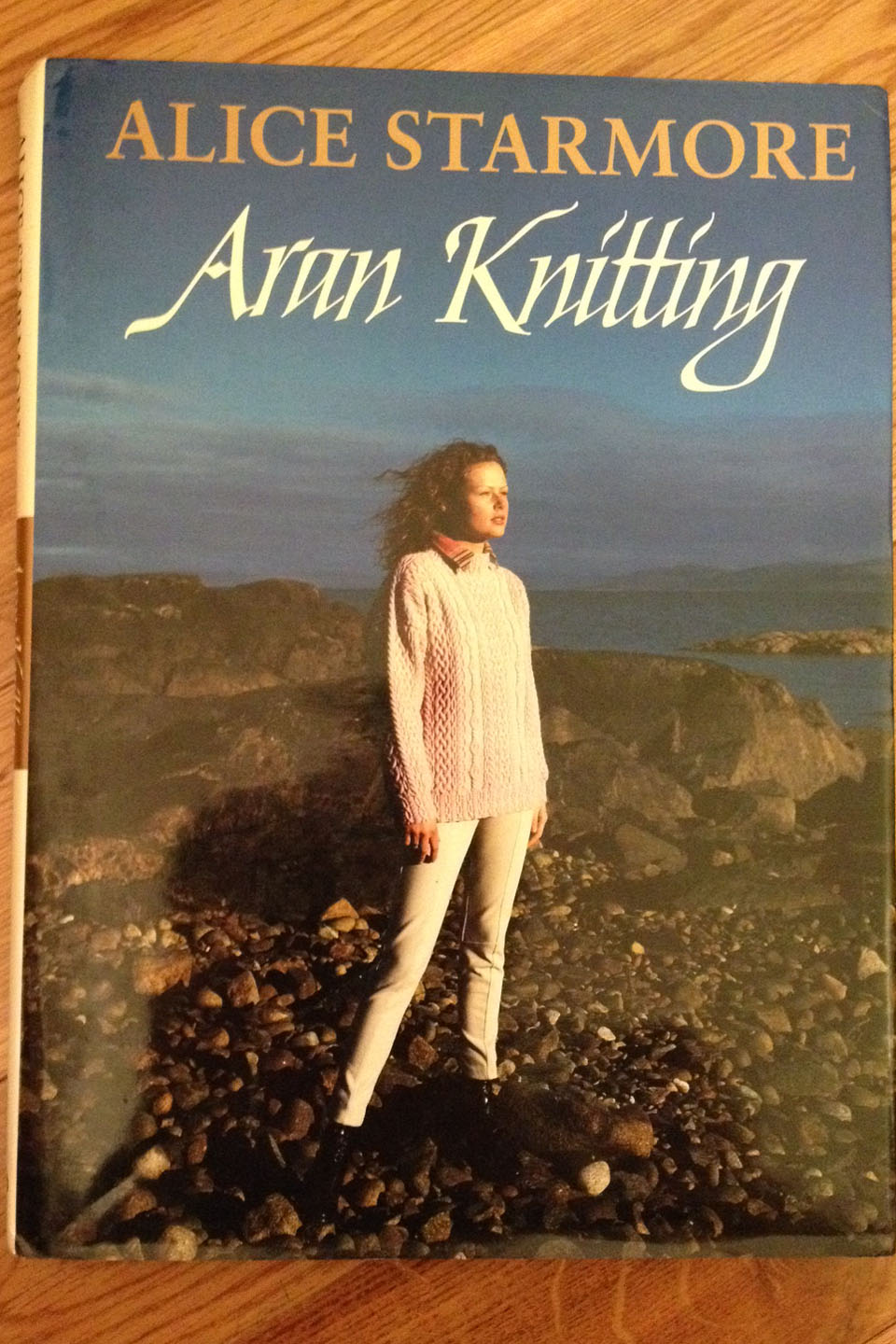
AranKnitting     oldAran

After reading the new intro for this book, I realized that I have have the original 1997 Aran Knitting book. That’s what comes from having way too many knitting/crochet books.

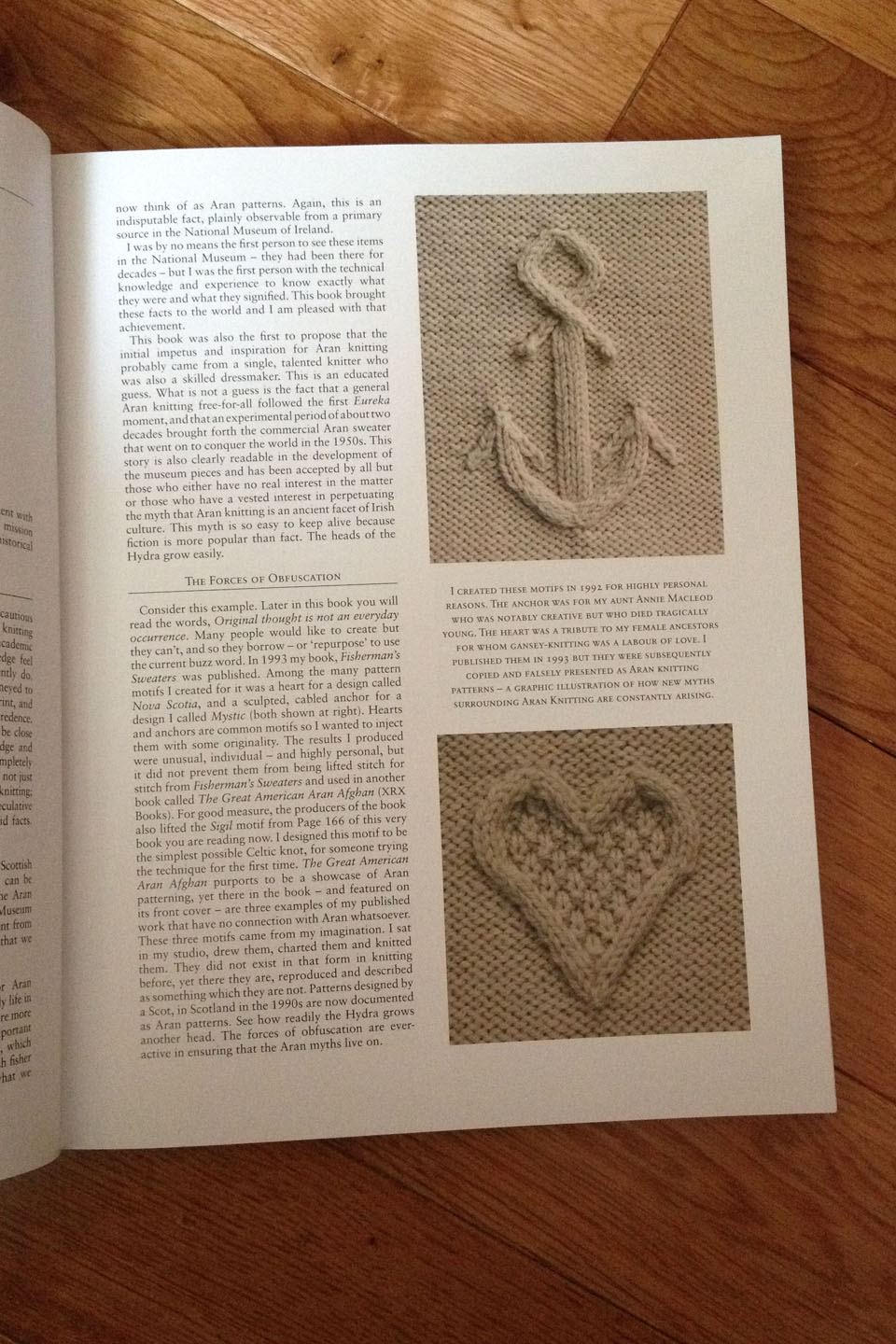
Alice’s comments in the new preface in the paragraph titled “The Forces of Obfuscation” were unsettling. Basically she believes that what people know as “Aran Knitting” is somewhat of a made-up, mystical history. Basically, she strongly  states that the word “Aran” has been mis-used as a type of cable patterning used mainly in sweaters that have nothing to do with the Aran Isles off of Ireland.  That’s kind of a short, cliff notes version of what she actually said.

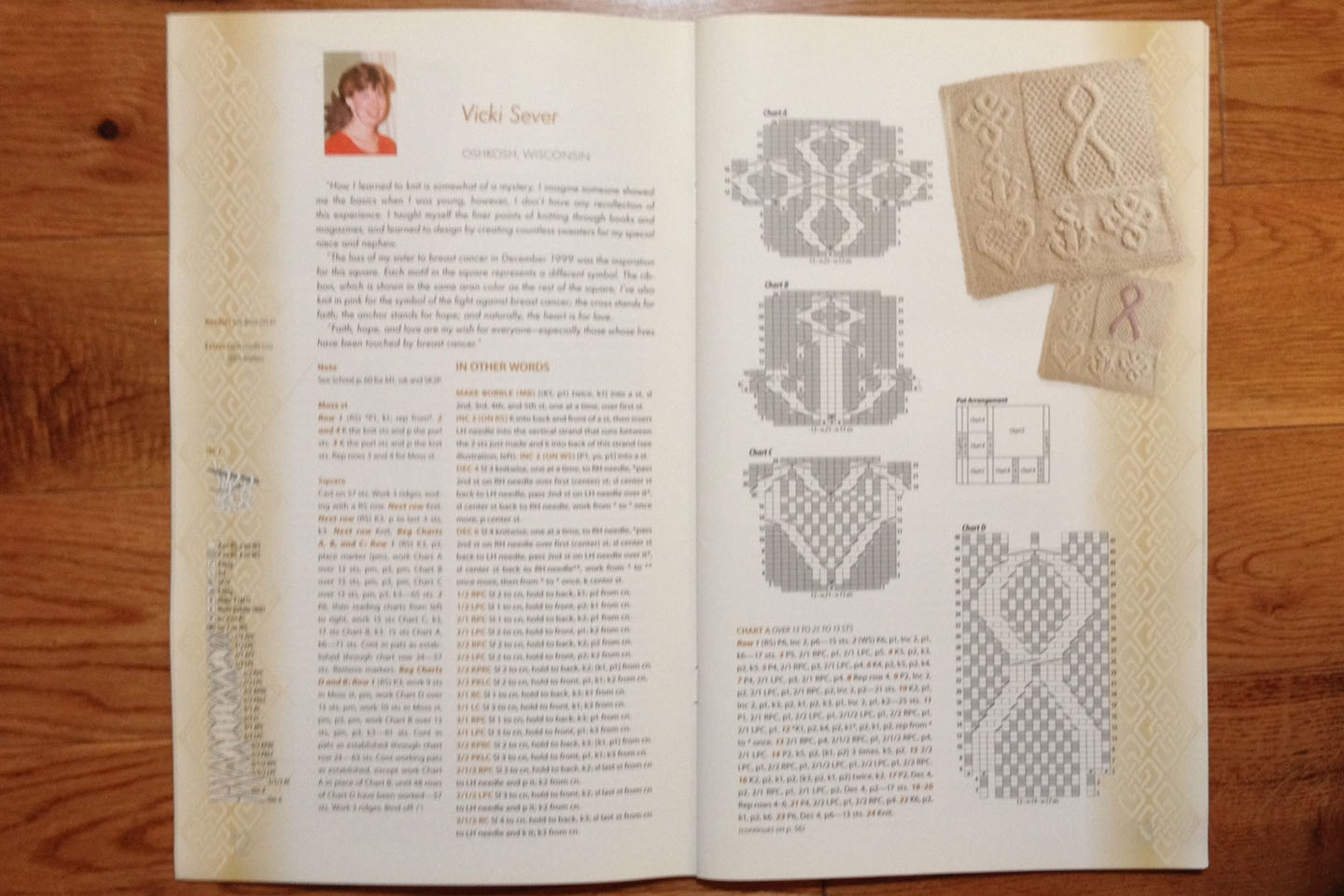
I somehow made it into her book in a round-about way. When I was working for Knitter’s Magazine, we created a contest that ultimately turned into a booklet of squares made up of various patterns that we loosely called “Aran Knitting”. It was titled  The Great American Aran Afghan. While we had no intention of saying these patterns or squares were authentic, historical designs from a country not anywhere near America.  Somehow Alice thought they “purports to be a showcase of Aran patterning”. Wow! Who knew! One of the squares used motifs picked up from Alice’s book. The square was created to honor a sister who had died of breast cancer. I’m sure the square’s designer didn’t realize that it was not correct to take someone else’s patterns to create a square for a published booklet.

After reading the new preface, I had to ponder before going on. I’m sorry for my part in Alice’s distress. Next week I’ll read more about the historical background and share….

Aran_book The Great American Aran Knitting booklet.


Alice_intro  diamond

Alice’s Original Patterns from her book.

Square_new

 The square that used designs created by Alice Starmore.